Best School Shoes for High School Students in Kenya: Tough Picks for Form 1 to Form 4
High school is where school shoes go to be tested. Teenagers walk further, play harder, and care less about protecting their footwear than primary school kids do. Add a growth spurt or two between Form 1 and Form 4, and picking the right pair becomes a real decision.
This guide covers what high school students actually need from a school shoe, the best styles for each stage, sizing advice for growing teens, and what it should all cost in Kenya.
What High School Students Need From School Shoes
A teenager’s school shoe works harder than any other shoe in the house. Before you shop, tick these boxes:
- Durability above all. Teens walk long distances, play at break, and kick everything. Weak glue and thin soles won’t survive a term.
- Comfort for 10-hour days. Classes, prep, sports — the shoe is on from 6am to 6pm. Cushioned insoles and breathable leather stop the complaints.
- A look they’ll actually wear. Form 2 students have opinions. A shoe they find embarrassing gets “lost” or destroyed. Smart, clean designs survive longer because teens respect them.
- Room to grow. A 14-year-old’s feet can jump a size in under a year. Buy with growing room, but not clown-shoe room.
- Uniform compliance. Most Kenyan secondary schools require black leather shoes. Confirm your school’s rule before ordering anything brown or fancy.
Best School Shoe Styles for Form 1 to Form 4
Lace-Up Leather Shoes: The High School Standard
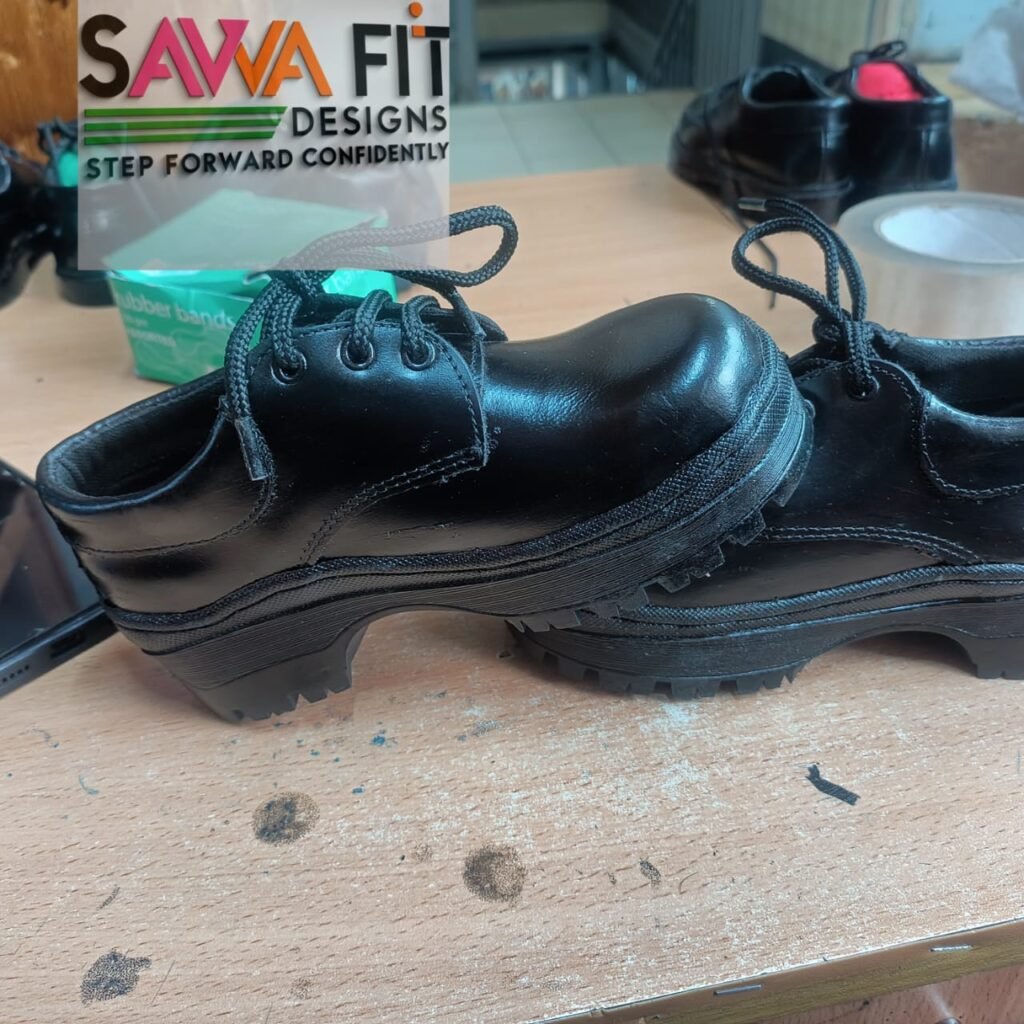
Lace-ups are the classic secondary school shoe for a reason. They give the most adjustable, locked-in fit — ideal for teens whose feet are still changing shape — and they look sharp with a full uniform.
Look for reinforced toes and stitched soles. Teens kick stones, desks, and footballs; the toe area takes the punishment. Quality leather lace-ups run around KSh 1,500 at sawafit.com, in sizes up to 42 and beyond.
Leather Slip-Ons: For the Low-Maintenance Teen
No laces to snap, no eyelets to tear, no morning fumbling. A smart leather slip-on suits day-school students with shorter commutes and schools that allow the style.
Bonus: slip-ons remove the two most common failure points in teen shoes, so they often outlast lace-ups in daily use. Around KSh 2,000.
Buckle Styles: Maximum Security for Active Students
For teens who play hard at break, a buckle strap keeps the shoe firmly on through football and running. Genuine leather buckle shoes — like the boys’ range at sawafit.com from KSh 1,200 — combine that security with the durability high school demands.
What to Avoid
- Synthetic “leather-look” shoes. They crack within a term under teenage punishment.
- Fashion-first designs. Chunky soles and decorative stitching look good in the shop and die on the playground.
- Sneakers as daily school shoes. Unless the school allows them, they’ll be confiscated — and they’re not built for 200 days of wear anyway.
Sizing Guide for Teenagers
Teen sizing trips up parents because growth is uneven. Use this as your reference, then measure to confirm:
| Stage | Typical Age | Common EU Sizes | Buying Tip |
|---|---|---|---|
| Form 1 | 13 – 14 | 35 – 38 | One size up — biggest growth years ahead |
| Form 2 | 14 – 15 | 36 – 39 | One size up |
| Form 3 | 15 – 16 | 37 – 40 | Half to one size up; growth slowing |
| Form 4 | 16 – 18 | 38 – 42+ | Buy the measured size |
Boys’ feet often keep growing into Form 3 or 4; girls’ feet usually settle earlier. Either way, measure heel to longest toe in centimetres before every purchase — the ten minutes saves you a return.
The Growing Room Rule for Teens
Leave about a thumb’s width (0.8–1.2cm) beyond the longest toe for Form 1 and 2 students. For Form 3 and 4, buy closer to the exact size — oversized shoes on a teen cause blisters, trips, and the quiet embarrassment of shoes that flap.
Boarding School vs Day School: Different Shoes, Different Needs
Boarding School
Boarders live in their shoes around the clock and can’t pop home for replacements. For them:
- Buy the toughest pair you can — genuine leather, stitched rubber soles
- Send two pairs if budget allows; rotation doubles lifespan
- Pack polish and a brush, and make the care routine non-negotiable
- Choose lace-ups or buckles over slip-ons for all-day security
Day School
Day scholars walk to and from school daily, often on rough or wet roads. For them:
- Prioritize treaded rubber soles for the commute
- Water-resistant polished leather for rainy seasons
- A comfortable, breathable interior for the longest days
Either way, the shoe checklist stays the same: leather upper, rubber sole, secure fastening, correct size with growing room.
Budgeting for High School Shoes
Here’s the honest maths for a four-year secondary journey:
| Approach | Cost Over 4 Years |
|---|---|
| Cheap synthetic pairs, replaced 2–3× a year | KSh 9,000 – 15,000 |
| Quality leather pairs, replaced once a year (mostly due to growth) | KSh 5,000 – 7,000 |
| Quality leather + basic care + one cobbler repair | KSh 4,500 – 6,000 |
Leather school shoes at sawafit.com run KSh 1,200–2,000, so a yearly replacement plan lands at the affordable end of that table. The “expensive” shoe is the cheap one you keep replacing.
FAQs: High School Shoes in Kenya
What are the best shoes for Form 1 students in Kenya?
Genuine leather lace-ups or buckle shoes, one size up from their measured foot. Form 1 students grow fast and play hard — you need durability plus growing room in the same shoe.
How many pairs does a boarding student need?
Two is ideal — one to wear, one to rest. Rotation extends both pairs’ lives, and a spare pair saves the term if one gets damaged or lost.
Are slip-on shoes allowed in Kenyan secondary schools?
It depends on the school. Many require lace-ups or buckles. Check the school’s uniform list before ordering a slip-on style.
My teen’s feet grew mid-term. Do I have to buy new shoes immediately?
If toes touch the front of the shoe or they complain of pinching, yes. Cramped shoes cause blisters, ingrown toenails, and posture problems. Measure and order online — delivery from sawafit.com reaches most towns in 1–2 days.
What colour school shoes do Kenyan high schools require?
Black leather is the near-universal standard. Some schools allow brown. When in doubt, black.
Set Them Up for Four Solid Years
The right high school shoe is genuine leather, rubber-soled, properly sized with growing room, and plain enough to pass inspection but smart enough that your teen won’t resent it. Get that combination and you’ll buy one pair a year — mostly because of growth, not damage.
Shop leather school shoes for teenagers in sizes up to 45 at sawafit.com — M-Pesa payment, countrywide delivery, and prices that leave room in the Form 1 budget for everything else on that very long list.