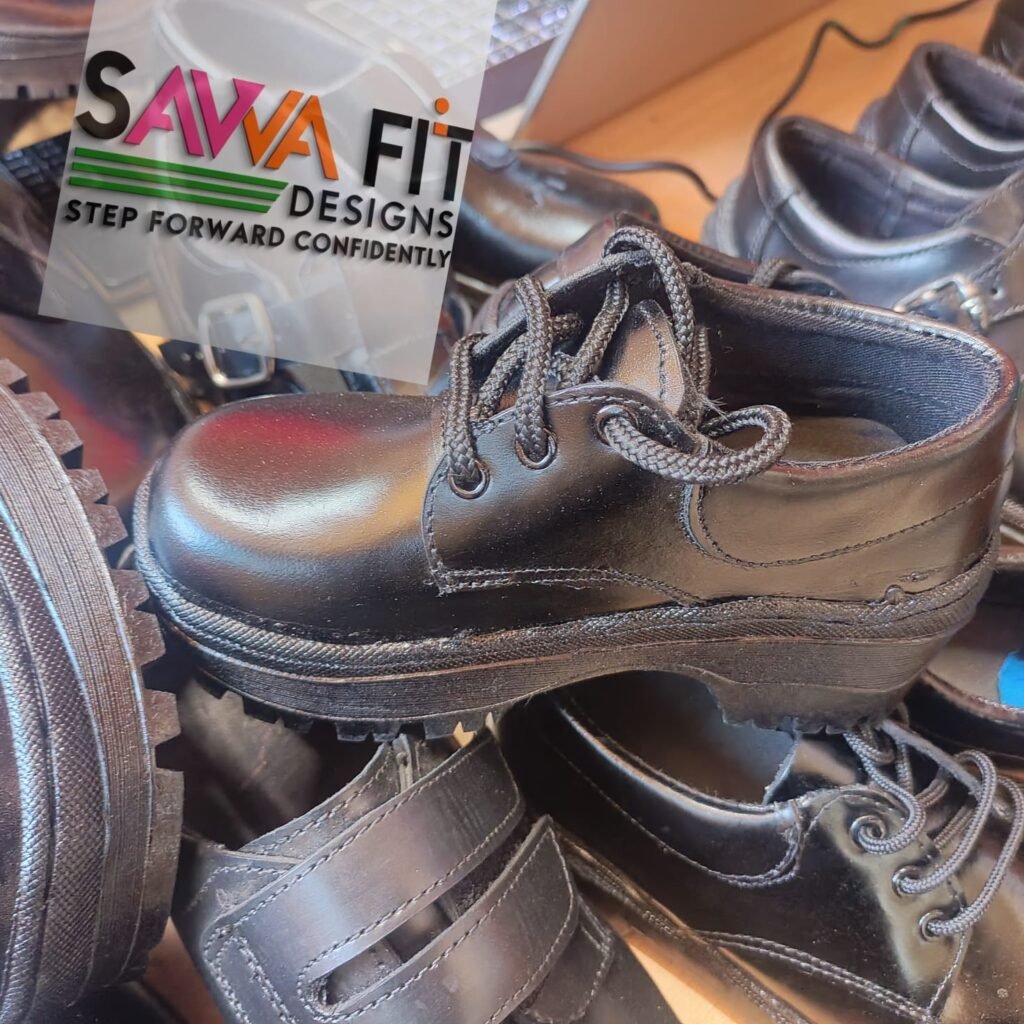
How to Dry Wet Leather School Shoes Without Damaging Them
Kenya’s rainy seasons can create a familiar problem for parents: your child arrives home with wet school shoes.
The immediate temptation is often to place the shoes directly in strong sunlight, next to a heater or under intense heat so they can be ready the following morning.
That may be convenient, but it can be a poor approach for leather.
If you want to know how to dry wet leather school shoes, the key is patience. Leather generally benefits from gradual drying rather than extreme heat.
Why Wet Leather Shoes Need Care
Leather contains natural characteristics that can be affected by excessive drying.
Rapid, intense heat may contribute to:
- Hardening
- Shrinkage
- Cracking
- Surface damage
- Loss of flexibility
Wet shoes can also develop unpleasant odors if they remain damp for too long.
Therefore, the objective is to remove moisture while avoiding unnecessary stress on the material.
Related Article: How to Make School Shoes Last the Whole Year
Step 1: Remove Excess Water
Start by wiping the outside with a soft, absorbent cloth.
Do not aggressively rub the leather.
If the shoes are very wet, gently press the cloth against them to absorb surface moisture.
Step 2: Remove Insoles Where Appropriate
If the insoles are removable, take them out.
This allows air to reach the interior.
Dry the insoles separately according to their material and care instructions.
Step 3: Open the Shoes
Untie laces.
Open buckles.
Loosen Velcro straps.
The objective is to allow air to circulate through the entire shoe.
Step 4: Stuff Them Lightly
Plain absorbent paper can help draw moisture from the inside.
Do not pack the shoe tightly.
The material should help absorb moisture while allowing the shoe to maintain its shape.
Replace damp paper as necessary.
Step 5: Let Them Dry Naturally
Place the shoes somewhere:
- Dry
- Well ventilated
- Away from excessive heat
- Protected from additional rain
A fan can improve air circulation if used appropriately, but avoid blasting extremely hot air onto leather.
Why Direct Heat Can Be a Problem
Leather can dry too quickly when exposed to intense heat.
For example, placing wet leather shoes directly against a very hot surface can cause the exterior to dry much faster than the interior.
This can contribute to changes in texture and flexibility.
Instead, think:
airflow + time > extreme heat
What About Sunlight?
Gentle indirect drying can be useful.
However, prolonged exposure to intense direct sunlight or high temperatures is not necessarily ideal for leather.
The safest approach is controlled drying in a ventilated environment.
Step 6: Wait Until Completely Dry
Do not rush the process.
If the interior still feels damp, give the shoes more time.
Putting damp shoes back on the following morning can encourage odor and may increase material deterioration.
Step 7: Restore the Leather
Once the shoe is completely dry, inspect the leather.
If the manufacturer recommends an appropriate polish or leather-care product, apply it according to the instructions.
SAWA FIT recommends black polish and shoe cream for improving appearance and providing protection for its leather school shoes.
Do not apply excessive product.
What Not to Do
Avoid these common mistakes:
Don’t use a hair dryer on maximum heat
Strong heat concentrated on a small area can dry leather too aggressively.
Don’t place shoes directly on a hot stove
This can damage both the leather and sole.
Don’t leave wet shoes sealed in a plastic bag
Trapped moisture can contribute to odor.
Don’t put them back on while wet
Allow sufficient drying time.
Don’t scrub aggressively
Wet leather can be more vulnerable to surface damage.
What If the Shoes Are Completely Soaked?
If your child’s shoes were submerged in water, the drying process may take significantly longer.
Remove as much surface water as possible and focus on gradual drying.
If the shoes have been severely damaged, a professional shoe repair specialist may be able to advise whether they can be restored.
Preventing Wet School Shoes
You can also reduce future problems.
Teach children to:
- Avoid unnecessary puddles
- Keep shoes in a dry location
- Use appropriate rain protection where possible
- Tell parents when shoes become wet
- Avoid storing shoes in damp bags
A Quick Wet-Shoe Checklist
| Action | Do it? |
|---|---|
| Wipe away excess water | Yes |
| Remove removable insoles | Yes |
| Loosen closures | Yes |
| Air dry | Yes |
| Use moderate airflow | Yes |
| Place directly against strong heat | No |
| Use high-temperature hair dryer | No |
| Store wet shoes in plastic | No |
| Apply care product after drying | If appropriate |
Can Wet Leather School Shoes Be Saved?
Often, yes.
Getting caught in the rain does not automatically ruin a pair of leather school shoes.
The outcome depends on:
- How wet they became
- How quickly they are dried
- The quality of the leather
- The construction
- Previous maintenance
- Whether excessive heat was used
Good-quality leather footwear can handle normal exposure when appropriately maintained.
SAWA FIT’s leather school shoes are described as all-weather footwear with protective uppers, although proper care is still important.
Final Thoughts
The best way to dry wet leather school shoes is slowly and naturally.
Wipe away excess water, open the shoes, remove removable components, use absorbent material if appropriate, provide good ventilation and keep the shoes away from excessive heat.
Once completely dry, restore the leather with an appropriate care product.
A few extra hours of patience can be much better than trying to dry a wet leather shoe in minutes.
ALAO READ: 9 Easy Ways to Get Rid of Shoe Odor