School Shoes for Children With Flat Feet: What Should Parents Look For?
Parents often become concerned when they notice that their child’s feet appear flat when standing. One of the first questions that follows is whether the child needs special footwear.
The answer is not always straightforward.
Children’s feet develop as they grow, and the appearance of the arch can vary considerably between individuals and ages. Some children with flat feet have no symptoms and participate in normal activities without difficulty.
Therefore, choosing school shoes for children with flat feet should begin with comfort, proper fit and observation rather than automatically purchasing highly rigid footwear.
What Are Flat Feet?
Flat feet describe a foot shape in which the arch appears lower or less pronounced when the foot is bearing weight.
In young children, visible arches may not be prominent because the feet are still developing.
A flat-looking foot is not automatically a sign that something is wrong.
When Should Parents Pay Attention?
Parents should pay closer attention if a child repeatedly experiences:
- Foot pain
- Ankle discomfort
- Difficulty walking
- Frequent fatigue
- Persistent blisters
- Unusual shoe wear
- Difficulty participating in normal activities
If symptoms are persistent, a qualified healthcare professional can assess the child’s feet and determine whether any intervention is necessary.
What Should Parents Look For in School Shoes?
1. Correct Length
The shoe should be long enough for the toes to move naturally.
Do not buy a dramatically oversized shoe simply because the child is growing.
2. Appropriate Width
A shoe should not squeeze the sides of the foot.
Children with broader feet may require designs that provide more room across the forefoot.
3. Secure Heel
The heel should remain reasonably stable when walking.
Excessive heel movement can contribute to friction and discomfort.
4. A Suitable Sole
A school shoe needs a sole that provides practical traction and appropriate flexibility.
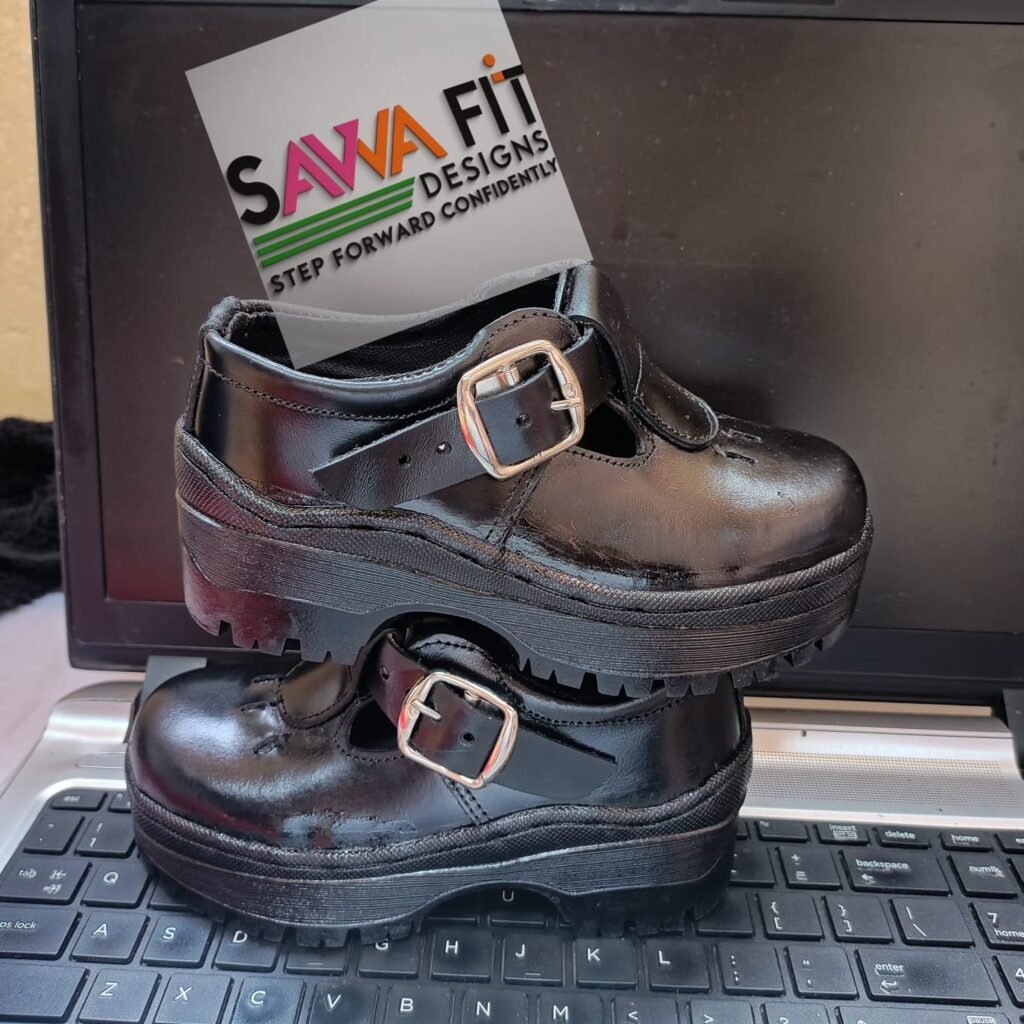
SAWA FIT describes its leather school shoes as having durable smart soles designed to be light and suitable for everyday walking.
5. Comfortable Interior
Children spend many hours wearing school footwear.
A comfortable interior can help reduce pressure and friction.
Look for:
- Smooth interior surfaces
- Comfortable footbeds
- Appropriate cushioning
- Materials that do not create excessive rubbing
See also: Best School Shoes for Kenya’s Rainy Season
Do Children With Flat Feet Need Arch Supports?
Not every child with flat feet requires an arch support.
This is an important distinction.
If a child has flat-looking feet but no pain or functional difficulty, there may be no need to purchase specialized orthotic footwear simply because the arch appears low.
On the other hand, if a healthcare professional recommends an insert or orthotic, the child’s everyday school shoes need enough internal space to accommodate it appropriately.
Don’t Add Thick Insoles Randomly
Adding an unnecessarily thick insole can make the shoe too tight.
This can create a new problem even if the original intention was to improve comfort.
If an insert is recommended, ensure that the footwear is compatible with it.
School Shoe Fit Is Still Essential
A good school shoe should not be:
- Too short
- Too narrow
- Excessively loose
- Too rigid
- Too heavy
- Difficult to secure
SAWA FIT’s fitting guidance recommends measuring both feet, checking toe room, ensuring heel security and trying shoes with the socks the child normally wears.
These principles are useful regardless of whether a child has a visible arch.
Flat Feet and Children’s Activities
School children are rarely sitting all day.
They walk between classrooms, play during breaks, participate in physical activities and may walk to and from school.
This means footwear needs to accommodate normal movement.
Parents should avoid selecting shoes solely because they look exceptionally rigid or “supportive.”
A shoe can be sturdy without being unnecessarily stiff.
How to Check Your Child’s School Shoes
Once every few weeks, look at the shoes while your child is standing.
Check:
- Is the child comfortable?
- Is the heel secure?
- Are the toes free?
- Is the shoe pressing against the sides?
- Is the sole wearing unevenly?
- Is the child complaining of pain?
- Has the child recently grown?
These simple checks can reveal problems early.
Signs the Shoe May Not Be Working
Watch for:
- Repeated complaints about foot pain
- Avoiding certain activities
- Frequent tripping
- Persistent rubbing
- Rapidly uneven sole wear
- Shoes becoming uncomfortable shortly after purchase
One isolated complaint may not mean the footwear is unsuitable, but repeated problems should be investigated.
Should You Choose Leather?
Leather is a common material for school footwear because it can offer durability, structure and a comfortable fit when properly designed.
SAWA FIT’s school-shoe range includes genuine leather products described as durable, comfortable and suitable for everyday school use.
However, parents should remember:
A quality material cannot compensate for a poor fit.
The shoe must suit the child’s actual foot.
When to Consult a Professional
If your child has persistent pain, swelling, difficulty walking or other ongoing concerns, seek professional assessment.
The purpose of buying appropriate school footwear is not to diagnose or treat a foot condition. It is to ensure that everyday footwear is comfortable and appropriately fitted.
Final Thoughts
Choosing school shoes for a child with flat feet does not have to be complicated.
Start with the fundamentals:
- Correct size
- Appropriate width
- Comfortable interior
- Secure heel
- Suitable sole
- Practical flexibility
- Easy fastening
Do not assume that every child with flat-looking feet needs specialized shoes.
Most importantly, pay attention to your child’s comfort and movement. If there are persistent symptoms, professional advice is more valuable than simply purchasing a different style of shoe.
With the right fit and sensible footwear choices, children can comfortably go about their daily school activities.