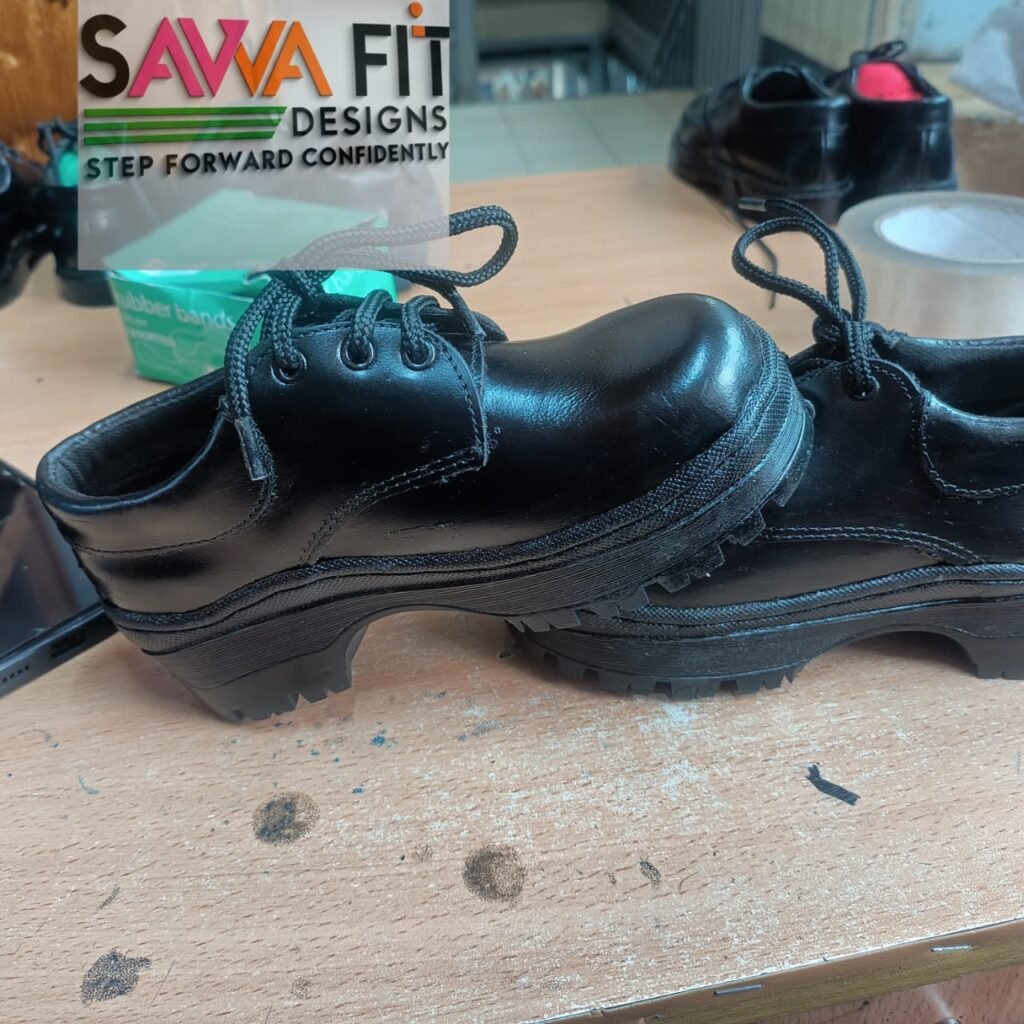
Best School Shoes for Children With Wide Feet: What Parents Should Know
Finding comfortable footwear can be challenging when a child’s feet are wider than average. A shoe may be the correct length but still feel painfully tight across the toes or sides.
This is why parents searching for school shoes for wide feet should look beyond the number printed inside the shoe.
Length is only one part of fit. Width, toe-box shape, heel security, flexibility and closure type also matter.
If your child frequently complains that school shoes pinch the sides of their feet, this guide can help you identify the problem and find a better-fitting pair.
What Does It Mean to Have Wide Feet?
Wide feet simply means that the foot requires more space across its width than the standard shape of a particular shoe can comfortably provide.
Children’s feet naturally come in different shapes. Some have relatively narrow feet, while others have broader forefeet or toes that require more room.
A child does not necessarily need a special medical shoe simply because their feet are wide. The important thing is finding footwear that accommodates their natural shape without excessive pressure.
Signs Your Child’s School Shoes May Be Too Narrow
Parents can look for several clues.
1. Red Marks on the Sides
Remove the shoes after school and inspect the sides of the feet.
Persistent red marks may indicate excessive pressure or friction.
2. Complaints About Pinching
If your child says:
“The shoe is squeezing my foot.”
Take the complaint seriously.
Children may not always be able to describe precisely where a shoe hurts, so ask whether the discomfort is at the toes, sides, heel or underneath the foot.
3. The Foot Bulges Over the Sole
Look at the shoe while your child is standing.
If the foot visibly spills over the edges of the outsole, the shoe may not be wide enough.
4. Frequent Blisters
Blisters around the little toe or sides of the forefoot can indicate repeated friction.
5. Difficulty Putting the Shoe On
If a shoe is difficult to put on despite having the correct length, its opening or overall shape may not suit the child’s foot.
RELATED ARTICLE: How often should you replace school shoes
Why Buying a Longer Shoe Doesn’t Fix Width
This is one of the most common mistakes parents make.
Suppose a child needs more width but the current shoe is the correct length. Moving up several sizes creates additional length but does not necessarily provide the correct overall fit.
The result can be a shoe that is:
- Too long
- Loose around the heel
- Unstable during walking
- More likely to cause tripping
The goal should be appropriate width and appropriate length, not simply a larger number.
What to Look For in School Shoes for Wide Feet
A Roomy Toe Area
Children should have enough space for their toes to sit naturally.
A rounded or appropriately shaped toe area may be more comfortable than an aggressively narrow design.
A Secure Heel
More room at the front should not mean a loose heel.
The shoe should remain reasonably secure around the back of the foot.
Adjustable Closures
Adjustable shoes can be particularly useful because they allow parents to control how tightly the shoe sits around the foot.
Options include:
- Velcro
- Buckles
- Laces
The best choice depends on the child’s age and ability.
Flexible Construction
A school shoe should allow natural movement at the appropriate part of the foot.
Avoid footwear that feels excessively rigid throughout.
Wide Feet and Leather School Shoes
Leather is commonly used for school footwear because quality leather can be durable and can adapt somewhat with use.
However, material alone does not guarantee a good fit.
A genuine leather shoe that is too narrow will still be uncomfortable.
When buying leather footwear, consider both:
Material quality + shoe shape + correct size
rather than focusing on material alone.
SAWA FIT’s children’s footwear collection includes genuine leather school shoes with different designs and size options, making it useful for parents comparing styles based on their child’s foot shape and fastening preference.
Comparing Closure Types for Wider Feet
| Closure | Potential advantage |
|---|---|
| Velcro | Easy adjustment and simple for younger children |
| Buckle | Can provide secure adjustable fastening |
| Laces | Allows relatively precise tension adjustment |
| Slip-on | Convenient but offers less adjustment |
No closure is automatically best for every wide-footed child.
The important question is whether the shoe can hold the foot securely without squeezing it.
A Simple At-Home Foot Measurement
Before ordering children’s shoes online, measure both feet.
You will need:
- Paper
- Pencil
- Ruler or measuring tape
- Socks your child normally wears to school
Place the foot on the paper while your child is standing naturally.
Mark the back of the heel and the longest toe. Measure the distance.
Then measure the widest part of the foot.
Repeat for the other foot.
Remember that one foot can be slightly larger than the other.
Use the larger foot when determining the required size.
Common Mistakes Parents Should Avoid
Buying Too Big
Trying to compensate for width by buying an excessively long shoe can create instability.
Ignoring the Child’s Feedback
Parents sometimes assume that a child will “break in” uncomfortable shoes.
Some footwear does become more comfortable with use, but persistent pain or pressure should not simply be ignored.
Focusing Only on Appearance
A polished black school shoe may look excellent but still be a poor choice if it does not fit.
Assuming Every Brand Fits the Same
Sizing can vary between manufacturers and designs.
A size that fits your child in one shoe may not feel identical in another.
When Should You Seek Professional Advice?
If your child consistently experiences foot pain, difficulty walking, persistent blisters or other concerning symptoms, speak with a qualified healthcare professional.
A simple wide foot is not automatically a medical problem, but persistent discomfort deserves attention.
Final Thoughts
The best school shoes for children with wide feet are not necessarily the largest shoes. They are shoes that provide enough width without sacrificing length, heel security and stability.
When shopping, look at the child’s actual foot shape rather than relying solely on age or shoe size.
Measure both feet, consider the toe area, check the heel and allow your child to describe how the shoe feels.
A comfortable school shoe can make a significant difference to a child’s daily experience at school.
For parents shopping for children’s footwear in Kenya, SAWA FIT provides several school-shoe designs and sizes, including leather options and different closure styles.