Best School Shoes for Children With Sweaty Feet: What to Look For
Some children naturally have feet that sweat more than others.
This can become particularly noticeable during school because children may wear the same pair of closed shoes for several hours.
Excessive moisture can contribute to discomfort, damp socks and unpleasant shoe odor.
The solution isn’t simply to buy the most expensive pair of footwear available. Parents should consider the entire combination of shoe material, ventilation, socks, hygiene, fit and drying habits.
Why Do Children’s Feet Sweat?
Sweating is a normal way for the body to regulate temperature.
Feet contain many sweat glands, so perspiration is not unusual.
Children may sweat more when they:
- Are physically active
- Spend many hours in closed shoes
- Wear thick socks
- Are in warm environments
- Wear poorly ventilated footwear
The important question is whether the moisture is causing persistent discomfort or other problems.
What Should Parents Look For in School Shoes?
1. Breathable Materials
A breathable shoe can help create a more comfortable environment around the foot.
Leather is often valued for its breathability compared with some less breathable synthetic materials.
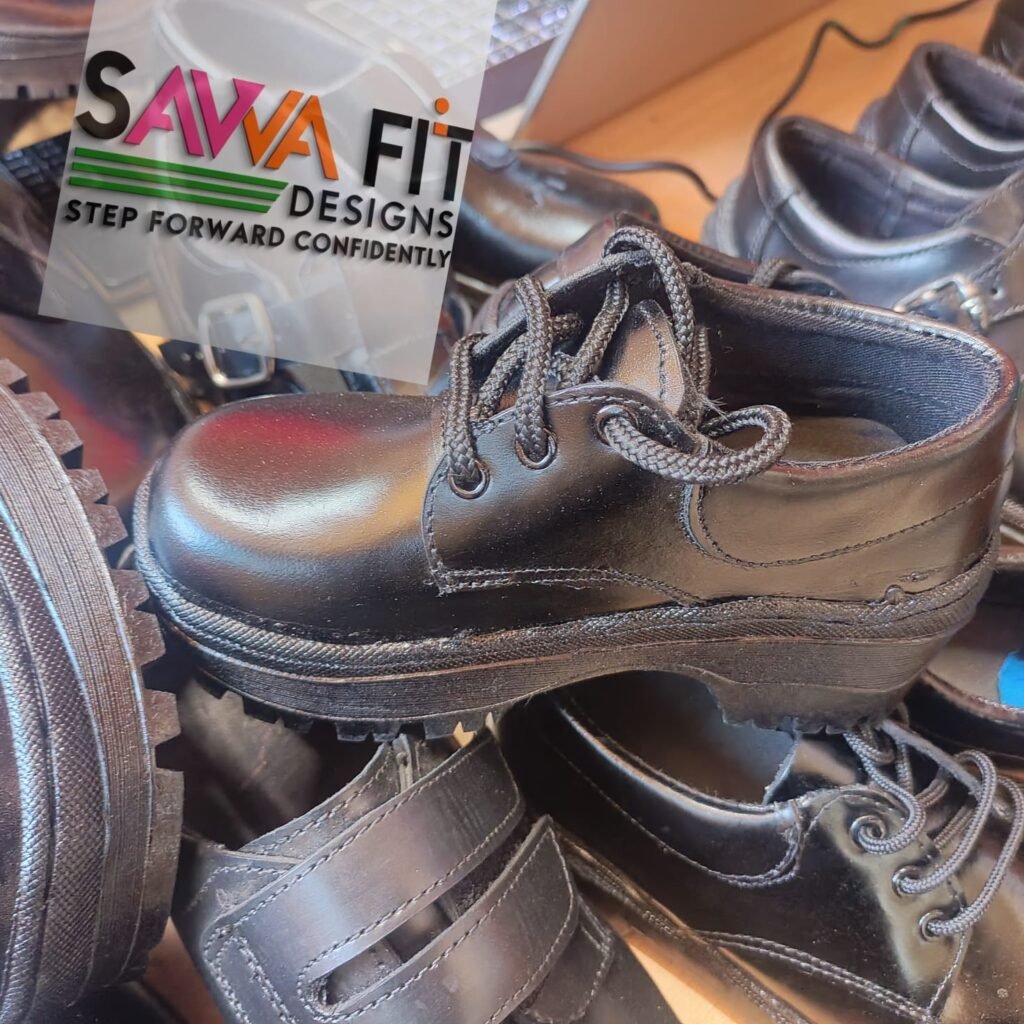
SAWA FIT describes its leather school footwear as comfortable and suitable for everyday use.
However, material alone does not eliminate sweat.
2. Comfortable Interior
The inside of the shoe matters just as much as the outside.
Look for:
- Comfortable lining
- A suitable footbed
- Smooth interior surfaces
- Reasonable moisture management
- Adequate toe space
A shoe that is too tight may also make the foot feel hotter and less comfortable.
3. Don’t Choose an Oversized Shoe
Some parents think a larger shoe will provide more airflow.
It may actually create a different problem.
An oversized shoe can allow excessive movement, causing:
- Friction
- Blisters
- Instability
- Premature wear
Choose an appropriately fitted shoe instead.
4. Choose Appropriate Socks
Socks play a major role in managing moisture.
A good school-shoe strategy should therefore consider:
Shoes + socks + foot hygiene
Encourage children to change socks every day.
If socks become very damp during the day, consider changing them when practical.
5. Keep Feet Clean and Dry
Children should wash their feet regularly and dry them thoroughly.
Pay particular attention to the spaces between the toes.
Putting socks onto damp feet can trap additional moisture.
6. Air School Shoes Every Day
At the end of the school day, allow footwear to breathe.
Avoid placing damp shoes immediately inside an airtight container or plastic bag.
Instead, store them somewhere dry and ventilated.
This is particularly important if your child has sweaty feet.
7. Consider Alternating Pairs
If your budget allows, alternating between two suitable pairs can give each pair more time to dry.
For example:
- Pair A: Monday
- Pair B: Tuesday
- Pair A: Wednesday
- Pair B: Thursday
This isn’t mandatory, but it can be useful for children whose footwear remains damp after a full school day.
RELATED ARTICLE: How to Tell if School Shoes Are Genuine Leather
Why Leather May Be Worth Considering
Leather has long been used in school footwear because it can offer a combination of durability, structure and breathability.
SAWA FIT’s leather school shoes feature leather uppers and comfortable interiors, with products described as suitable for all-day school use.
That makes genuine leather one material parents may consider when trying to improve everyday comfort.
But remember:
Breathable footwear can help manage moisture; it cannot prevent the feet from sweating.
How to Reduce Shoe Odor
Sweat and trapped moisture can contribute to unpleasant smells.
Parents can reduce odor by:
- Washing feet regularly.
- Drying feet properly.
- Changing socks daily.
- Airing shoes.
- Drying wet footwear promptly.
- Keeping interiors clean.
- Alternating shoes when practical.
If the odor is persistent despite good hygiene, look for other causes.
What About Foot Powder?
Some parents use foot powders to help manage moisture.
If you choose a product, follow its instructions and make sure it is appropriate for children.
Avoid using products on irritated or broken skin unless advised by an appropriate professional.
When Should Parents Be Concerned?
Sweaty feet alone are usually not a reason for alarm.
However, if your child experiences persistent:
- Itching
- Peeling
- Cracking skin
- Pain
- Sores
- Significant irritation
- Unusual odor
consider seeking professional medical advice.
School Shoe Features at a Glance
| Feature | Why it matters |
|---|---|
| Breathable material | Can improve comfort |
| Comfortable lining | Reduces rubbing |
| Correct size | Prevents unnecessary friction |
| Secure heel | Reduces movement |
| Suitable sole | Supports daily activity |
| Easy ventilation | Helps footwear dry |
| Durable construction | Handles repeated use |
Common Mistakes Parents Make
Wearing the Same Damp Shoes Every Day
This gives the shoe little time to dry.
Ignoring Socks
Shoes cannot solve a moisture problem if socks remain damp.
Buying Very Tight Shoes
Tight footwear can increase discomfort.
Using Excessive Chemicals
More products do not necessarily mean cleaner or fresher footwear.
Ignoring Persistent Symptoms
If there are ongoing skin problems, don’t assume they are simply caused by school shoes.
Final Thoughts
The best school shoes for children with sweaty feet are not defined by one material or brand.
Instead, look for footwear that combines:
- Appropriate fit
- Comfortable construction
- Good ventilation
- Suitable materials
- A secure closure
- Practical durability
Then combine the shoes with clean socks, good foot hygiene and proper drying.
For Kenyan parents, genuine leather school footwear can be one option worth considering because leather can provide a comfortable and relatively breathable footwear environment. SAWA FIT offers several genuine leather school-shoe designs for children.
The goal isn’t to stop your child’s feet from naturally sweating. It’s to make sure that moisture does not turn into discomfort, odor or unnecessary footwear problems.
ALSO READ: