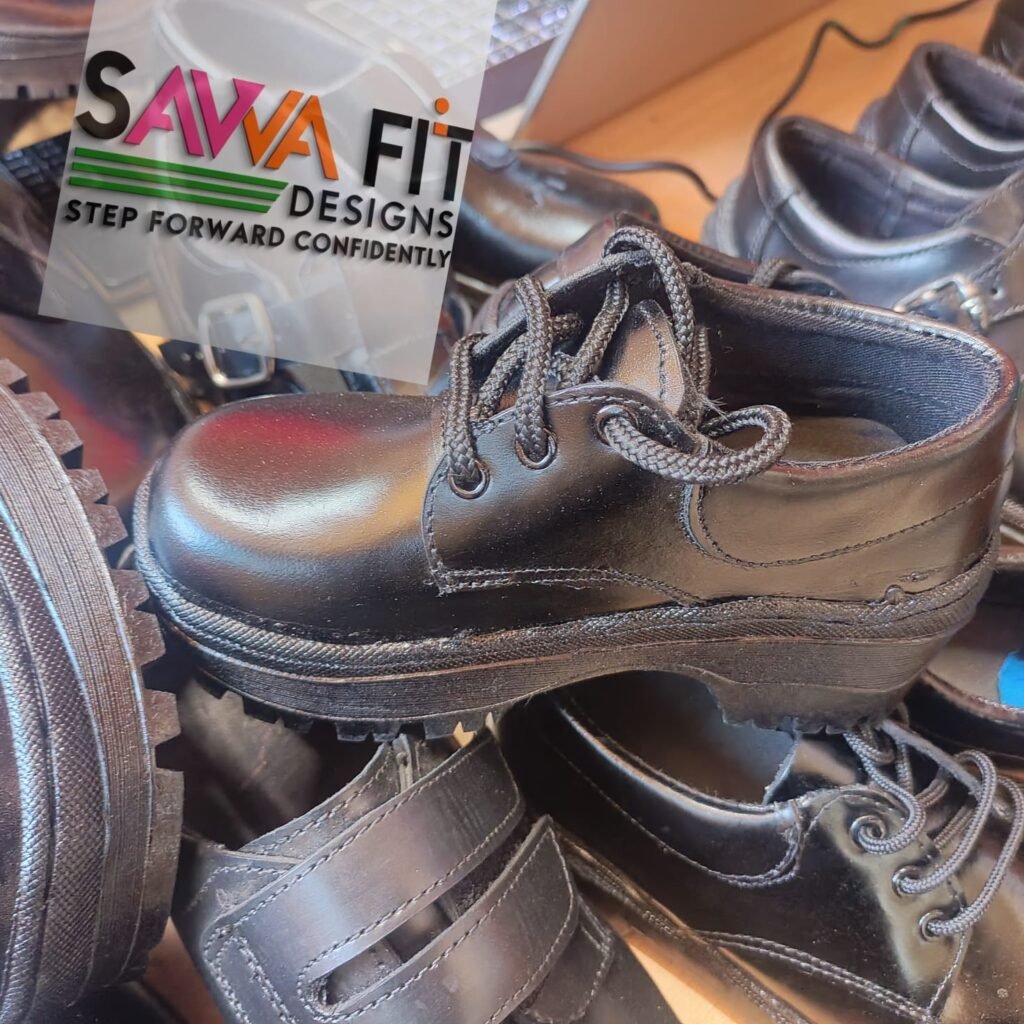
What Are the Best School Shoes for Kindergarten Children? A Parent’s Guide
Buying school shoes for a kindergarten child is different from buying footwear for an older student.
Young children are still developing coordination and independence. They may need help putting on their shoes in the morning, but they are also learning to manage their own clothing and footwear.
Kindergarten children can also be particularly active. Their school day may include walking, outdoor play, running and frequent transitions between activities.
That means their footwear should be practical, comfortable and easy to manage.
ALSO READ: Signs Your Child’s School Shoes Are Too Small
What Should Kindergarten School Shoes Provide?
Good footwear for young children should generally offer:
- A comfortable fit
- Appropriate toe space
- Secure fastening
- Reasonable flexibility
- Good traction
- Comfortable interior
- Durable construction
- A manageable weight
The shoe should not feel excessively heavy or restrictive.
1. Choose the Correct Size
Young children grow quickly, which can tempt parents to buy shoes several sizes too large.
Avoid this.
An oversized shoe may cause:
- Heel slipping
- Tripping
- Instability
- Blisters
- Difficulty running
- Poor control
Instead, choose a size that provides reasonable growing room without compromising stability.
SAWA FIT’s fitting guidance recommends measuring both feet and ensuring appropriate toe room while keeping the heel secure.
2. Think About Independence
Can your child put the shoes on independently?
This question is important for kindergarten.
Velcro shoes are often practical because children can open and close them without learning the more complex steps involved in tying laces.
Slip-on footwear can be even simpler, but it must fit securely.
Buckles can also be manageable for some children.
3. Consider the School’s Uniform Rules
Before buying, check the school’s footwear requirements.
Some schools may specify:
- Black footwear
- Closed shoes
- Specific styles
- Particular fastening systems
Do not assume that any black children’s shoe will meet the school’s requirements.
4. Look for Good Grip
Kindergarten children move around frequently.
They may walk across:
- Classrooms
- Corridors
- Outdoor areas
- Grass
- Playgrounds
- Pavements
A suitable outsole should provide practical traction.
This is especially important when surfaces become wet.
5. Choose a Comfortable Interior
Young children may spend several hours in their shoes.
Look for footwear with a comfortable interior that does not create unnecessary rubbing.
Pay attention to:
- Seams
- Heel lining
- Toe area
- Footbed
- Internal edges
After the first few days of use, check your child’s feet for unusual redness or blisters.
6. Leather or Synthetic?
Both materials are available in children’s footwear.
Leather is often chosen for school shoes because it can provide durability, structure and a classic appearance.
SAWA FIT’s children’s school footwear includes genuine leather options designed for regular school use.
Synthetic footwear can also be suitable depending on its quality and construction.
Parents should assess the entire shoe rather than choosing based solely on the material name.
7. Don’t Buy Solely Based on Appearance
Young children may love shiny or decorative shoes.
Parents should prioritize practical features.
A kindergarten school shoe should be:
- Comfortable
- Secure
- Durable
- Easy to manage
- Appropriate for the uniform
Style can come afterward.
Kindergarten Shoe Checklist
Before purchasing, ask:
Fit
- Does the child have sufficient toe room?
- Is the heel secure?
- Does the shoe pinch?
Comfort
- Is the interior smooth?
- Does the child complain of rubbing?
- Is the shoe reasonably lightweight?
Security
- Can the child walk without the shoe slipping?
- Does the closure remain fastened?
Practicality
- Can the child put it on independently?
- Can the child remove it without damaging the shoe?
Velcro vs Slip-On for Kindergarten
| Feature | Velcro | Slip-On |
|---|---|---|
| Easy to put on | Excellent | Excellent |
| Adjustability | Good | Low |
| Heel security | Usually good if fitted correctly | Depends on fit |
| Independence | Excellent | Excellent |
| Suitable for active children | Generally good | Depends on design |
The choice should depend on the individual child’s ability and the shoe’s actual fit.
What About Laces?
Laces are not necessarily unsuitable for kindergarten.
However, they require more coordination.
If your child already knows how to tie and manage laces confidently, lace-up shoes can work perfectly well.
If not, Velcro or another simple closure may make the daily routine easier.
How Many Pairs Does a Kindergarten Child Need?
One good pair may be sufficient for many families.
However, having a second pair can be useful if:
- The child frequently gets shoes wet
- The child sweats heavily
- The school environment is dusty or muddy
- The family wants to alternate footwear
- The first pair needs time to dry
The decision ultimately depends on budget and practical circumstances.
How to Teach Children to Care for Their Shoes
Kindergarten is a good time to introduce basic shoe-care habits.
Teach your child to:
- Put shoes away after removing them.
- Avoid kicking them off.
- Tell an adult if the shoes become wet.
- Keep shoes away from muddy areas where possible.
- Open closures before removing footwear.
- Tell you when shoes become uncomfortable.
These simple habits can extend shoe life.
Final Thoughts
The best school shoes for kindergarten children are not necessarily the most expensive or fashionable.
They are footwear that fits properly, stays securely on the foot, is comfortable throughout the school day and is simple enough for the child to manage.
For many younger children, Velcro or other easy closures can make daily routines much easier. As children develop their coordination, laces and other fastening options become increasingly practical.
SAWA FIT offers children’s school footwear in several designs and sizes, including genuine leather and different closure options.
Related: Laces, Velcro or Slip-On